Drain The Ocean Pacific War wrecks on a drained seafloor
Lady Lex, Indianapolis, Fuso — sonar landscapes from the Battle of the Pacific.
The Pacific theatre of the Second World War left steel on a basin the size of a planet. Drain the Oceans season 2, episode 8 — “Pacific War Wrecks” in National Geographic’s YouTube titling — sends a high-tech expedition after hulls that sit far deeper than Normandy or Pearl Harbor’s inner harbour. The hour in the middle of this page is that episode: USS Lexington from the Battle of the Coral Sea, Guadalcanal’s lost ships including USS Juneau, the Japanese battleship Fuso, and USS Indianapolis, the cruiser that delivered components of the Hiroshima bomb and was sunk days later. This wiki treats those sites as graves and as survey stories. It does not publish loot coordinates.
Lady Lex is the emotional centre. The carrier, about 274 metres long and able to launch more than sixty aircraft, escaped the 7 December 1941 strike on Pearl Harbor because she was at sea. Coral Sea in May 1942 was the first carrier-versus-carrier battle in which the opposing ships never saw each other. Lexington was mortally wounded by bombs and torpedoes, abandoned, and scuttled. Decades later, an expedition found the wreck standing proud on the Coral Sea floor. Drain CGI lets a camera walk the flight deck and the debris field as if the water were gone. The pedigree is a targeted sonar survey, not a GEBCO cell. Read how mapping works and CGI drain for that distinction.
Guadalcanal, Fuso, and Indianapolis
Guadalcanal’s waters hold a different density of loss: night surface actions in the Slot, destroyers and cruisers that sank in minutes, USS Juneau with the five Sullivan brothers among the dead. A drain reconstruction can show how a hull broke and where the debris settled. It cannot reconstruct the minutes of the battle; that is a history problem. Use the film as a landscape. Use a naval history for the night.
Battleship Fuso was destroyed in the Surigao Strait action of October 1944, part of Leyte Gulf. The episode locates the wreck and uses the drain to show how a capital ship comes apart when magazines and torpedoes agree. USS Indianapolis is the closing memorial. After delivering her secret cargo, she was torpedoed by I-58 on 30 July 1945. Hundreds of sailors died in the water over days. The wreck was found in the Philippine Sea in 2017, far deeper than a recreational dive. Drain CGI is a way to look without visiting. It is not a playground.
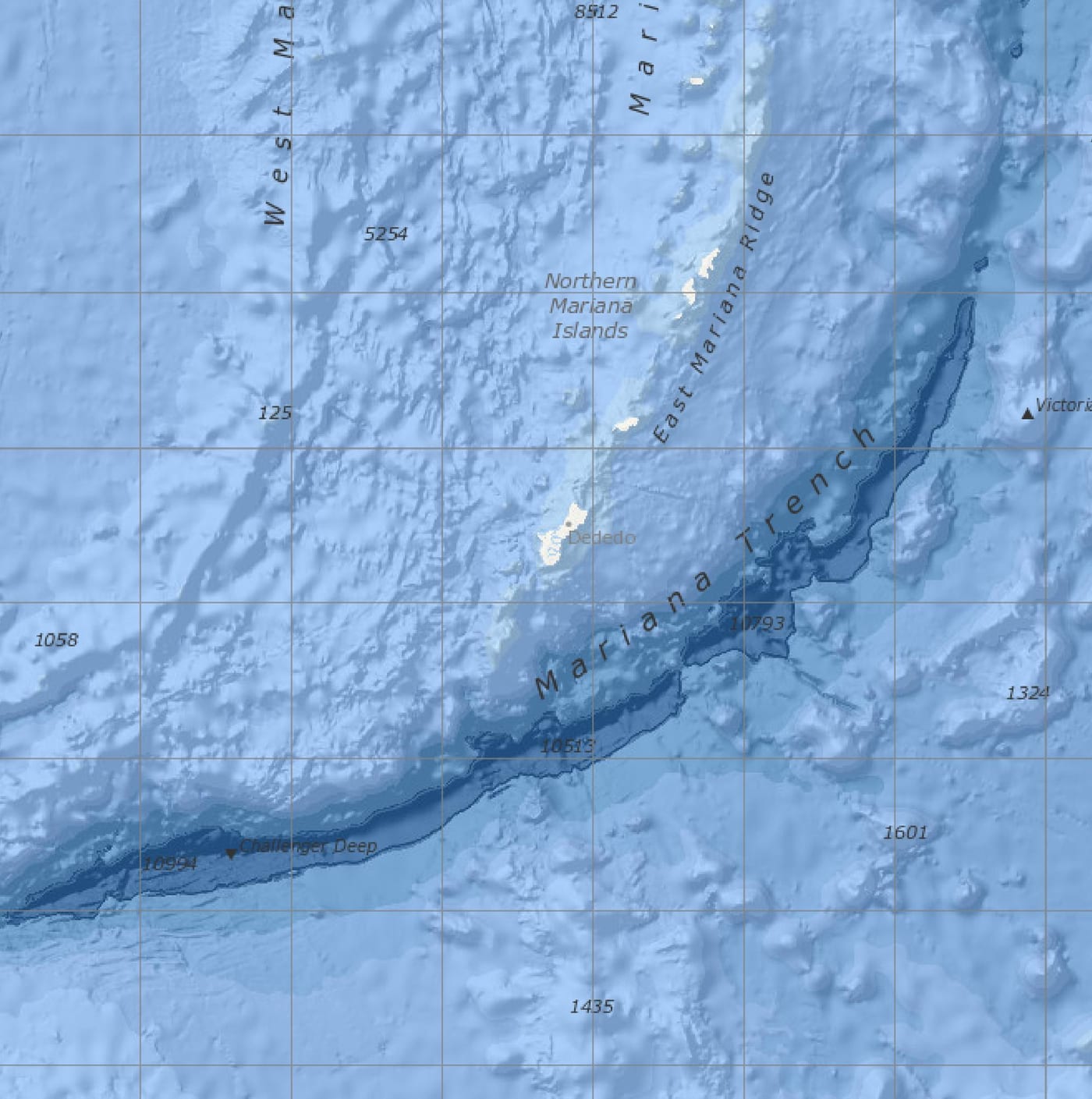
These Pacific hulls sit on a seafloor that is mostly abyssal plains and volcanic arcs, with trenches nearby in the Marianas. The Guam bathymetry on this page’s hero is that neighbourhood: island-arc slopes, not a North Atlantic rise like the Titanic. Depth bands matter. Lexington and Indianapolis are deep. Arizona in Pearl Harbor is shallow. Mixing them in one thumbnail is how a mega-episode misleads. Keep this page, the Pearl Harbor page, and the wartime wrecks hub page in conversation.
How this page sits in the archive
The National Geographic mega-compilation on wartime wrecks still earns a slot on wartime wrecks. This page is the Pacific-named hour. Spanish imperial wrecks are on Spanish Armada. Sunken cities are not war graves in the same sense; they live on sunken cities. Geology of the basin is on seafloor. Coverage of the unmapped Pacific is on Seabed 2030 — 28.7% of the global seafloor mapped to modern standards as of April 2026, with remote Pacific plains among the gaps.
Many Pacific casualties remain a magnetic anomaly or a side-scan contact. The films sometimes composite a generic hull onto a regional grid. When an episode title is specific — Lexington, Indianapolis, Fuso — assume a targeted mapping story and then check the hour. The episode guide lists original titles and dates. Season 2, episode 8 originally aired in the 2019 run; YouTube full-episode uploads on the National Geographic channel are how many readers now meet it.
Watch as marine archaeology and as memorial. Then read a primary history of Coral Sea, Guadalcanal, Leyte Gulf, or the Indianapolis sinking. The drain is a camera. It is not a verdict on the war. For streaming names, use where to watch. For related National Geographic drain films outside the numbered seasons, use related specials.
Sources: National Geographic “Pacific War Wrecks” episode (S2E8) and YouTube full-episode upload; Wikipedia Drain the Oceans tables; published Coral Sea, Surigao Strait, and Indianapolis wreck-discovery reporting; Seabed 2030 April 2026 coverage for basin context.
Frequently Asked Questions
Quick answers drawn from the pages on this wiki.
Which Drain the Oceans hour covers USS Lexington?
Season 2’s Pacific War wrecks episode, the film embedded on this page. Catalogue: episode guide.
Is USS Indianapolis in the series?
Yes. The same Pacific hour locates the cruiser that delivered Hiroshima-bomb components and was later sunk.
Does this wiki give dive GPS for Pacific wrecks?
No. Many are graves in deep water. Use official heritage channels. Overview: wartime wrecks.